If You Want a Scene, Show Up For It
Cwrw, grassroots music and what it takes to build creative space in West Wales
There is a point in my conversation with Mike from Cwrw where I ask him what Carmarthen’s grassroots music scene looks like at the moment.
“Well, it’s me,” he says.
He is joking, sort of, but the comment ends up being a fairly good entry point into everything we talk about afterwards.
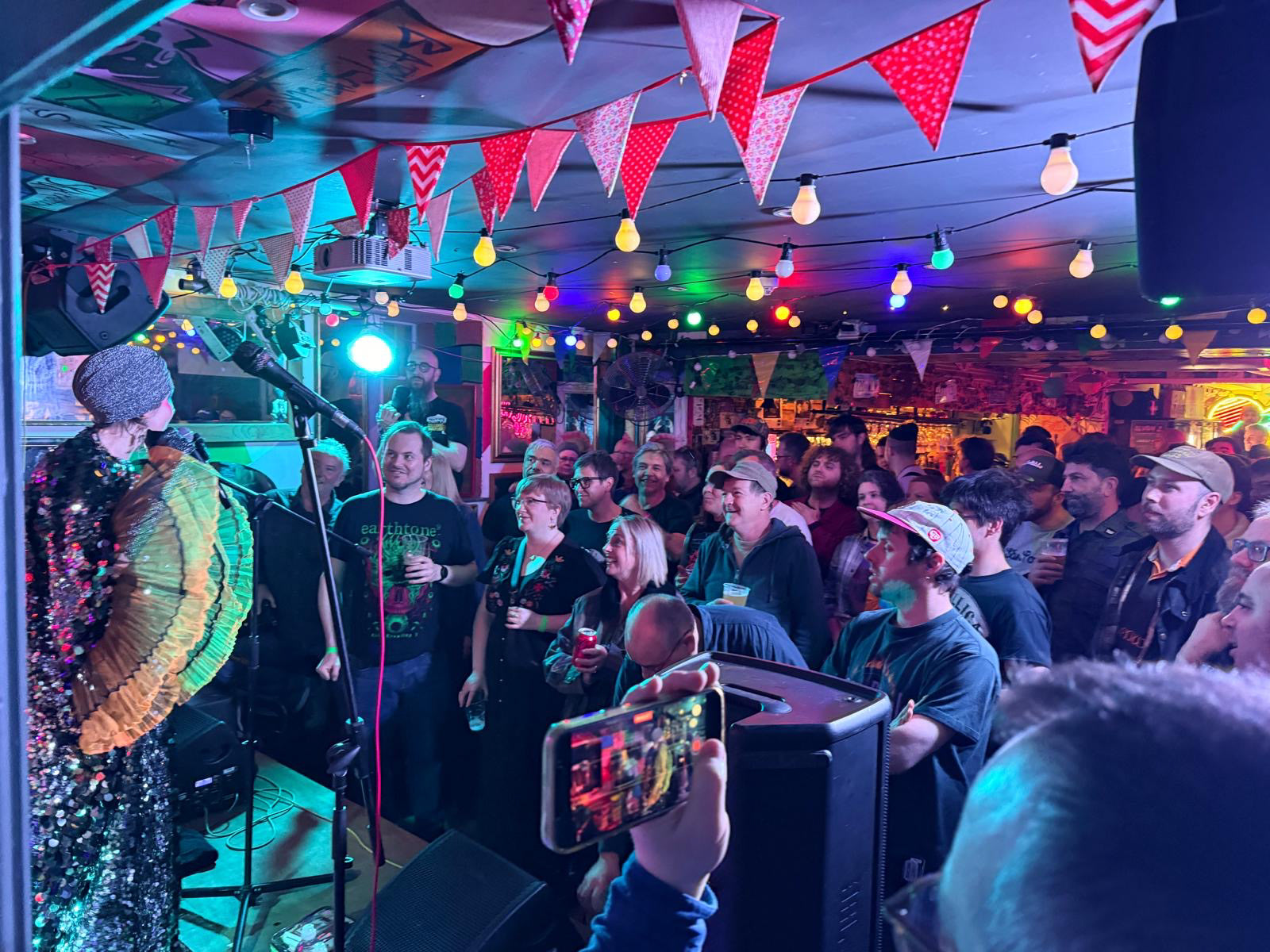
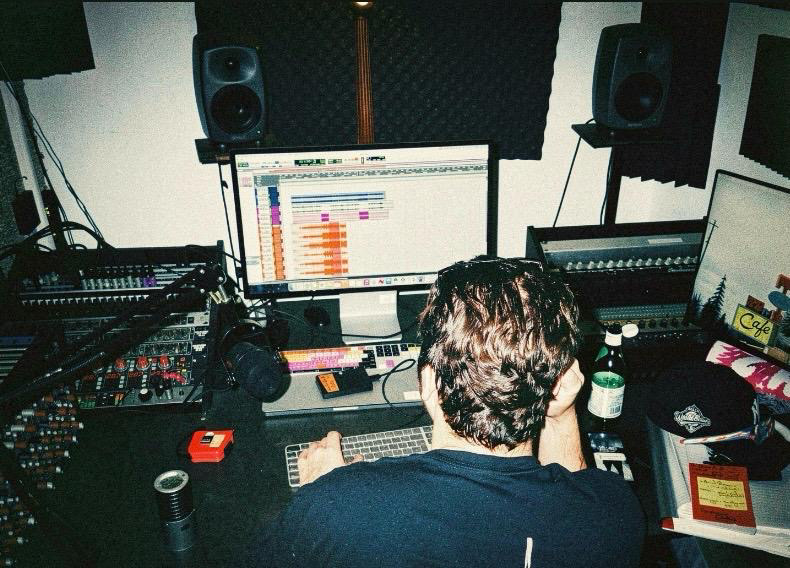
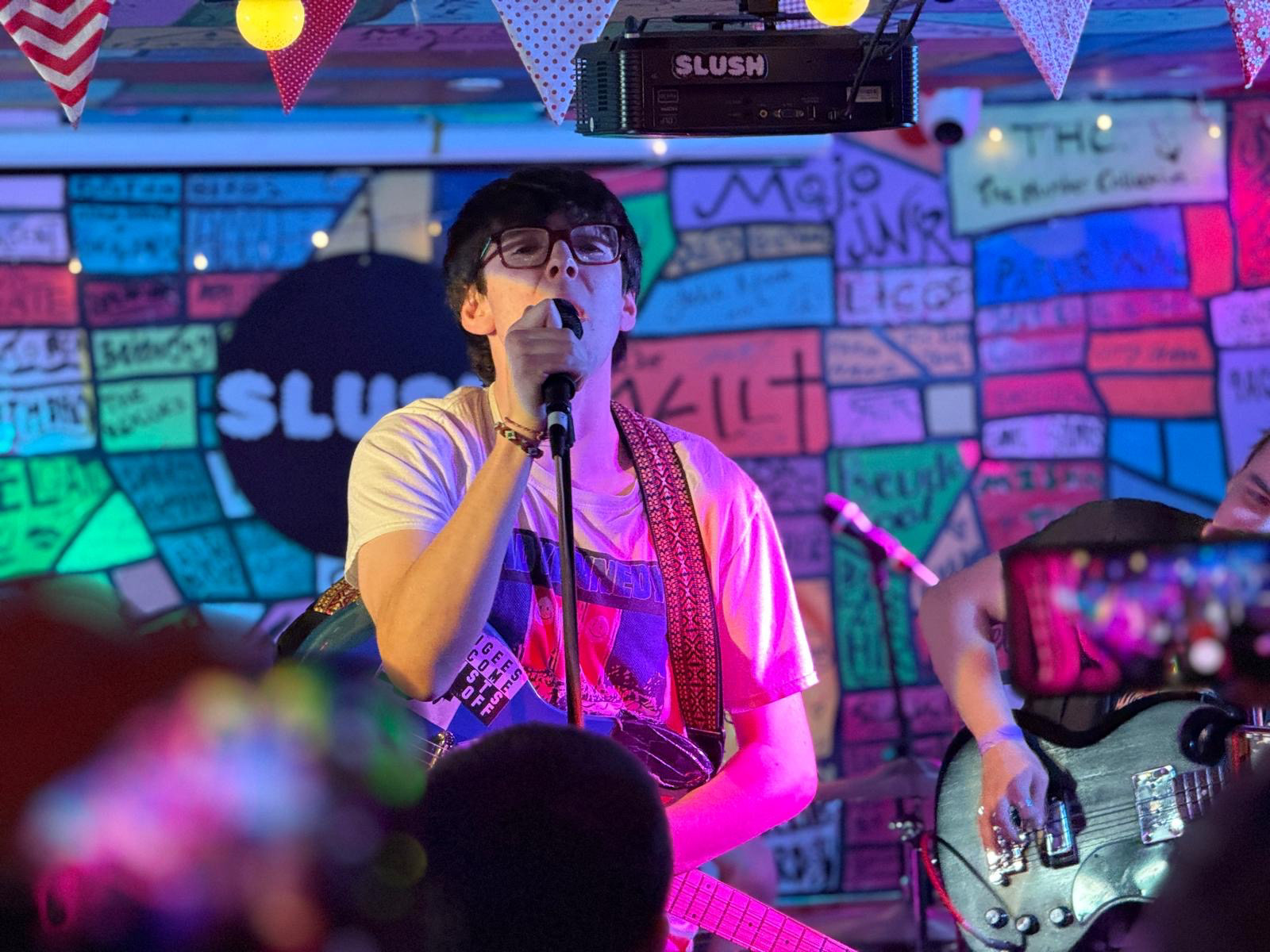
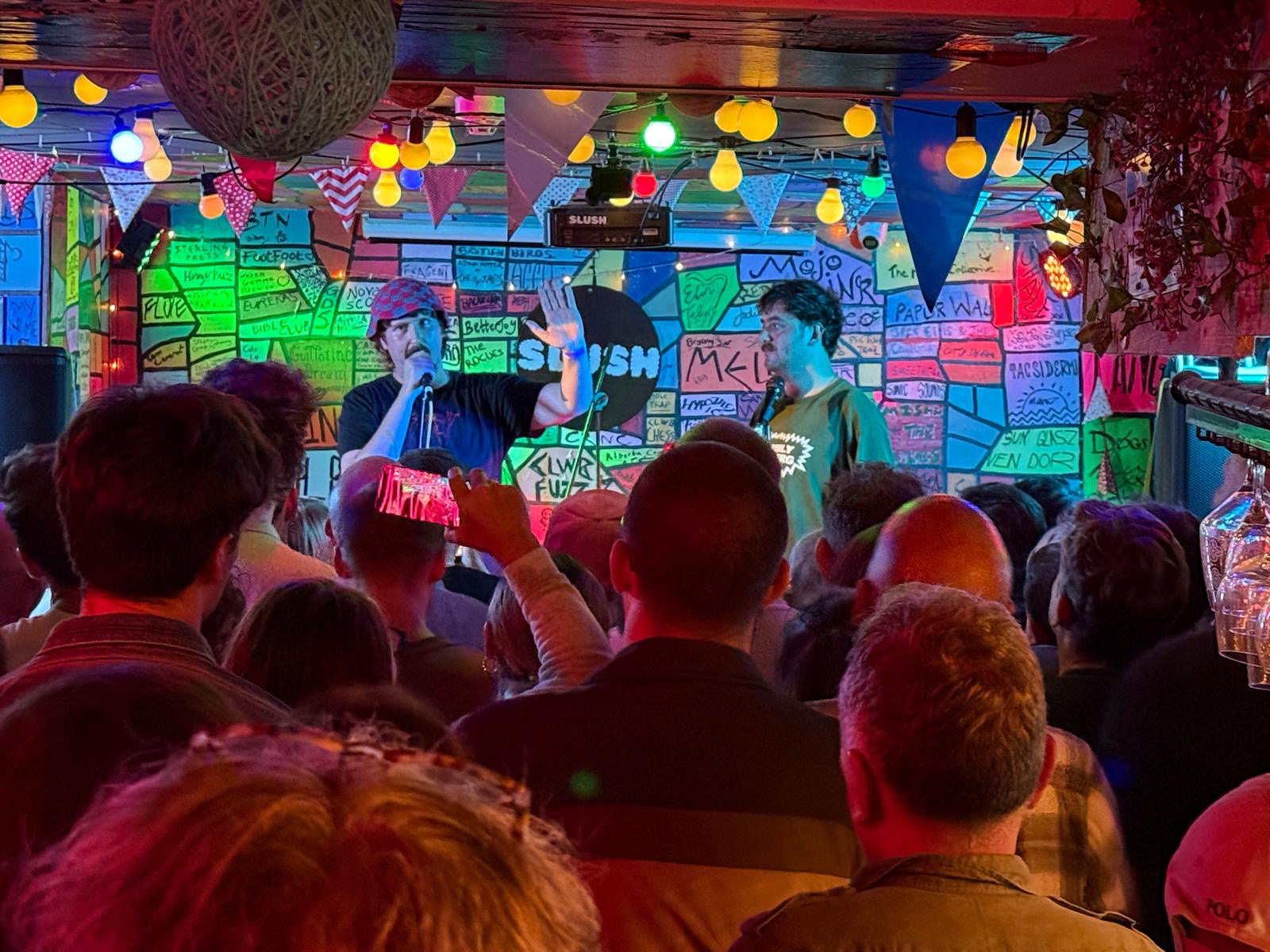
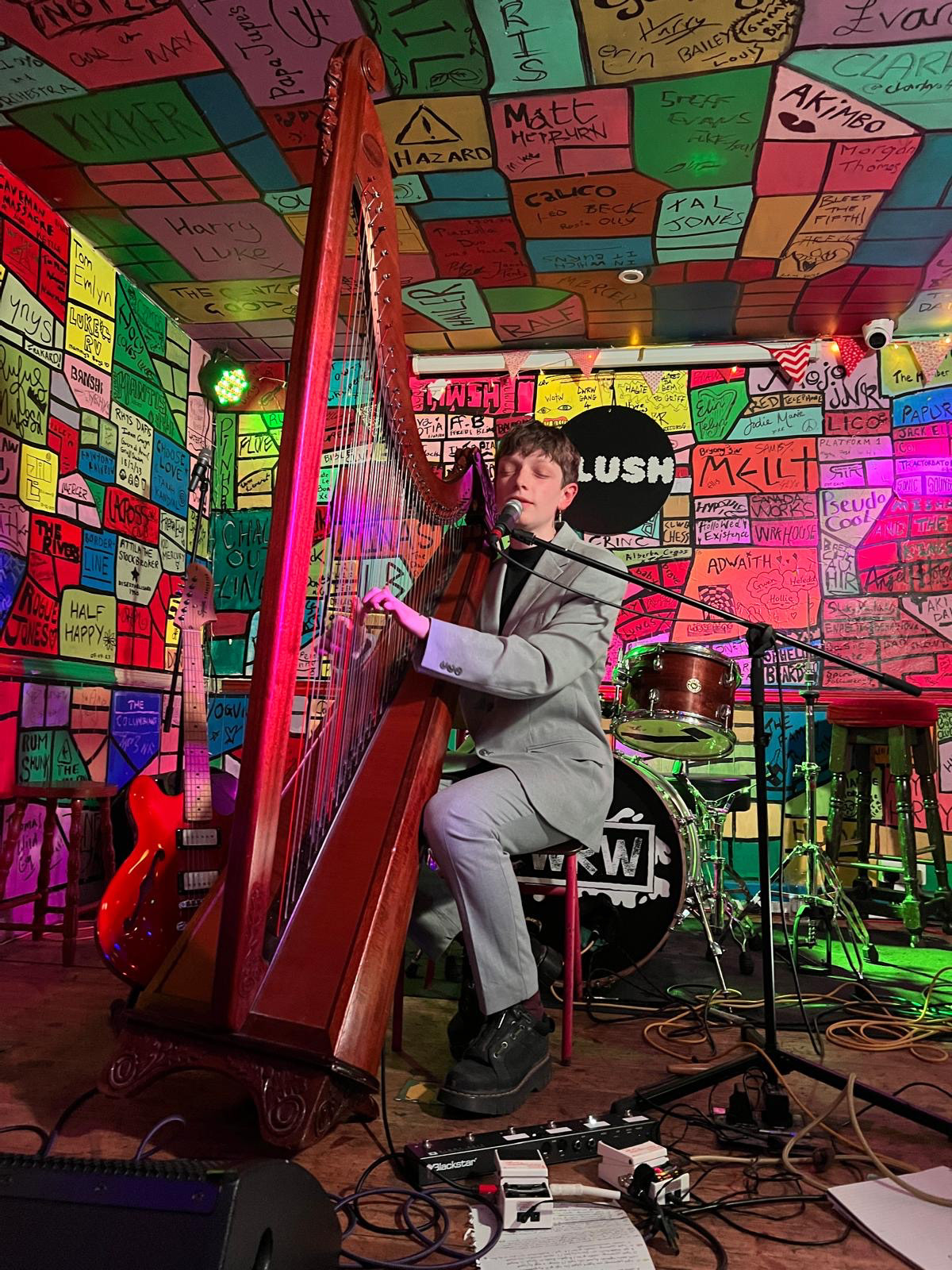
Cwrw sits in Carmarthen in the former home of the Tangled Parrot and has gradually grown into far more than a place to go and watch a band. There is live music, rehearsal space, recording facilities, opportunities for emerging artists and now a developing education partnership with Music Factory Wales.
What interested me most, though, was the way all of those things connect.
Because when we talk about having a creative scene in West Wales, the conversation often starts with the talent. Do we have enough bands? Enough artists? Enough people doing interesting things?
The answer to that is fairly obviously yes.
The more interesting question is what exists around them.
Where do they rehearse? Where do they record? Where do they play their first gig? Who tells them who to email? Where do they learn live sound? How does somebody go from playing music with friends to actually beginning to understand the industry around it?
Cwrw is one example of what starts to happen when somebody decides to build some of that infrastructure locally rather than waiting for it to appear.
And, as Mike tells me fairly early on, none of it began with a particularly elaborate masterplan.
Building it as you go
Mike originally worked in education, including with young people with additional learning and behavioural needs, after studying art and considering other creative routes himself.
When the former Tangled Parrot premises became available in 2019, he decided to take the opportunity to leave teaching and pursue something he had wanted to do for years.
“I paid a deposit with money I didn’t have,” he tells me.
What followed was a fairly intense introduction to running a venue: working behind the bar, learning live sound, learning the business itself and doing all of that while also having a newborn baby at home.
He describes the early years as less of a business strategy and more a case of getting up, dealing with whatever was in front of him and keeping going.
That doesn’t mean there wasn’t an idea behind it.
Mike wanted to create somewhere where live music, rehearsal and recording could exist together, and over the years that idea has continued to grow.
From 2 October, Music Factory Wales will also operate from the building, offering tuition across instruments, singing, arts and production. It is a partnership Mike describes as something that simply made sense: Cwrw had the facilities, Music Factory Wales were looking for a new base and both organisations were already operating within different parts of the same creative ecosystem.
It also formalises something Cwrw has already been doing naturally.
People have come through the venue and studio and learned aspects of live sound, production and studio work simply by being involved. The potential now is to develop those routes more intentionally and give people a clearer way into areas of the music industry that might otherwise feel fairly inaccessible.
The bit nobody necessarily tells you
This is something we end up talking about a lot.
There is a fairly significant difference between being talented and knowing how to navigate a creative industry.
You can form a band, write songs and become technically very good at what you do while still having absolutely no idea how to find a gig, approach a promoter, book a studio or work out what your next move should be.
For younger musicians in particular, Mike sees guidance as an important part of that.
Sometimes it comes from parents who understand the industry. Sometimes it comes from a friend, a lecturer, a manager or somebody already involved in music who knows where the opportunities are.
But not everybody has that person.
Mike talks about young Welsh bands who have already recorded and performed at Cwrw and have been able to access opportunities partly because somebody around them was able to make those first connections.
That naturally raises the question of what happens to the young musician whose parents have no connection to music at all, or who simply doesn’t realise there is a studio nearby that actively wants emerging artists to use it.
The answer, at least partly, is better communication.
Mike talks about stronger links between venues, studios, colleges and local organisations so that opportunities do not remain tucked away inside individual networks. Cwrw can offer the space, but young people still need to know that space exists and understand how to access it.
We start talking about directories, venues, promoters and the fact that all of these people are often operating within their own circles. There are already lists of venues and there are Facebook groups, but that is not necessarily the same thing as having somewhere that actually helps people understand how the different parts of the creative sector fit together.
Artists need venues. Venues need artists. Promoters need both. Studios need musicians. Colleges have students looking for opportunities. Quite often the useful bit is simply getting those people into the same conversation.
Building a scene outside the city
One of the reasons I wanted to speak to Cwrw in the first place was because Off-Kilter keeps returning to the same question: what does it actually take to develop a sustainable creative scene further west?
Mike is quick to point out that the answer is more complicated than simply saying Cardiff gets everything.
Larger towns and cities naturally have bigger audiences, more organisations and more opportunities to demonstrate reach. If funding is being distributed according to how many people an organisation can support, a larger venue in a more densely populated area can make an immediately convincing case.
The difficulty is what happens when investment continually follows the places where the infrastructure already exists.
Mike's view is that if you want a healthy creative ecosystem, you have to invest in the infrastructure underneath it as well. The talent is already here. The challenge is making sure people have somewhere to develop it.
That becomes particularly obvious when you look at what grassroots venues actually do. They are not simply smaller versions of bigger venues. They occupy a completely different point in an artist’s development.
Mike mentions Getdown Services, who played Cwrw twice before moving into considerably bigger opportunities, as well as M(h)aol, whose own trajectory quickly moved beyond rooms of this size.
That is the exciting part of grassroots music.
You might be watching somebody in a small room at exactly the point before everything changes for them.
And without enough of those rooms, the rest of the industry eventually has a problem too. Artists do not suddenly appear at the point where they can sell hundreds or thousands of tickets. They need places where they can learn how to perform, build audiences, make mistakes and get better first.
Making the creative bit financially possible
Of course, none of this escapes the reality that Cwrw is also a business operating during a difficult period for hospitality.
The live music side has historically been supported heavily through wet sales, with money from gigs going to the artists rather than becoming a major source of profit for the venue itself.
Mike says wet sales have fallen by more than half.
The reasons are not particularly mysterious. People are watching what they spend, nights out are expensive and even those on decent salaries are making decisions about what they can cut back on.
Mike is very realistic about that. People have mortgages, families, food bills and plenty of other things competing for the same money.
But it does mean venues have to find other ways to make themselves sustainable.
For Cwrw, that has meant developing several parts of the organisation rather than expecting the bar alone to carry everything.
The studio operates as a non-profit, with money generated through it going back into the community and the space itself, while the partnership with Music Factory Wales creates another income stream alongside the opportunities it brings for collaboration. Mike is also exploring a move towards community shares for Cwrw.
What I find interesting about that is that his thinking is not just about accessing funding now, but about what happens to the space later.
He wants Cwrw to continue beyond the point where it depends on him personally being the one driving it.
For something that began with a borrowed deposit and a fairly loose plan to see what happened, there is now a much bigger question around how to make the space part of Carmarthen’s longer-term creative infrastructure.
More than a venue
This is perhaps the bit I kept coming back to after the interview.
It would be easy to describe Cwrw simply as a music venue, but that misses quite a lot of what is happening around it.
There is the studio. There are rehearsals. There are people learning technical skills. There are young musicians accessing opportunities. There are touring acts coming through. There is now an education provider moving into the building.
Those things start feeding into one another.
Mike uses the word incubator at one point when talking about the role Cwrw can play for emerging artists, which feels pretty accurate, despite the conversation immediately descending into a slightly questionable metaphor about “warming the eggs of talent” that I promised I probably wouldn’t publish.
Probably.
The serious point underneath it is that creative careers need somewhere to begin. And those beginnings do not always happen through formal routes.
Sometimes somebody volunteers at a venue, learns how it works and starts meeting people.
Mike tells me about one young artist, Sam Kelly, who performs as Minag. He began volunteering at Cwrw at 17 and, by 18, had signed to a label, was producing and writing his own music and preparing to move to London.
That does not mean every person who walks into a grassroots venue is about to become a professional musician.
It does show what becomes possible when younger creatives can actually get close enough to an industry to understand how it works.
There is plenty happening here
Another part of our conversation moves into Welsh-language music and the way different parts of the Welsh creative sector connect.
Mike works with Welsh-language artists and sees a lot of value in the support available around Welsh-medium culture, but he also wonders whether Welsh- and English-language music sometimes operate in slightly separate worlds when there is more opportunity for crossover between the two.
His interest is less in comparing the two and more in how they can feed into the same wider creative sector.
It is an interesting point, particularly in Carmarthenshire, where the Welsh language is part of everyday life in a way that is noticeably different from much of Pembrokeshire.
It is also another reminder that there is no single Welsh music scene.
Different places develop their own identities, genres, networks and opportunities. Mike has his own theories about which areas produce which kinds of music, and I’m not entirely convinced we solved that one, but the broader point stands.
There is a lot happening across Wales outside the obvious centres.
The challenge is making it visible and making sure the different parts can find each other.
“If you want a scene, show up for it”
Towards the end of the interview I ask Mike what people actually mean when they say we should “support the local music scene”.
It is one of those phrases we use constantly without necessarily thinking about what it looks like in practice.
He refers to something Cwrw had posted recently:
“If you want a scene, show up for it.” Which, really, is difficult to argue with.
There are bigger structural conversations around funding, infrastructure and affordability that cannot be solved by telling people to buy more gig tickets.
But where we can support the things happening around us, it matters.
Go to the gig. Try the band you haven't heard of. Use the studio. Share the event. Tell someone about the venue. Find out what is happening ten miles down the road rather than assuming you need to head straight to Cardiff or Bristol to find something interesting.
Because the more people I speak to through Off-Kilter, the less convinced I am that West Wales has a shortage of creativity.
What we have is a lot of people building things in different corners, often without enough visibility of what everybody else is doing.
Cwrw is one of those places where several of those strands are starting to come together: live music, recording, rehearsal, education and opportunities for emerging artists all operating from the same space.
There are challenges involved in keeping somewhere like that running, obviously, but the more interesting story is that it exists at all, that it is developing and that there are people actively trying to build more around it.
The talent is already here.
The exciting bit is seeing what happens when the infrastructure begins to catch up.
Interview thanks to Mike @ Cwrw
Images courtesy of Cwrw.